
Editorial review
Rita’s Wait
By Rina Pita
In an Antofagasta unsettled by the unrest of 1918, a young woman’s dreams take shape amid the uncertainties of a city in upheaval.
Reviewed by CANREADS
Find your copy
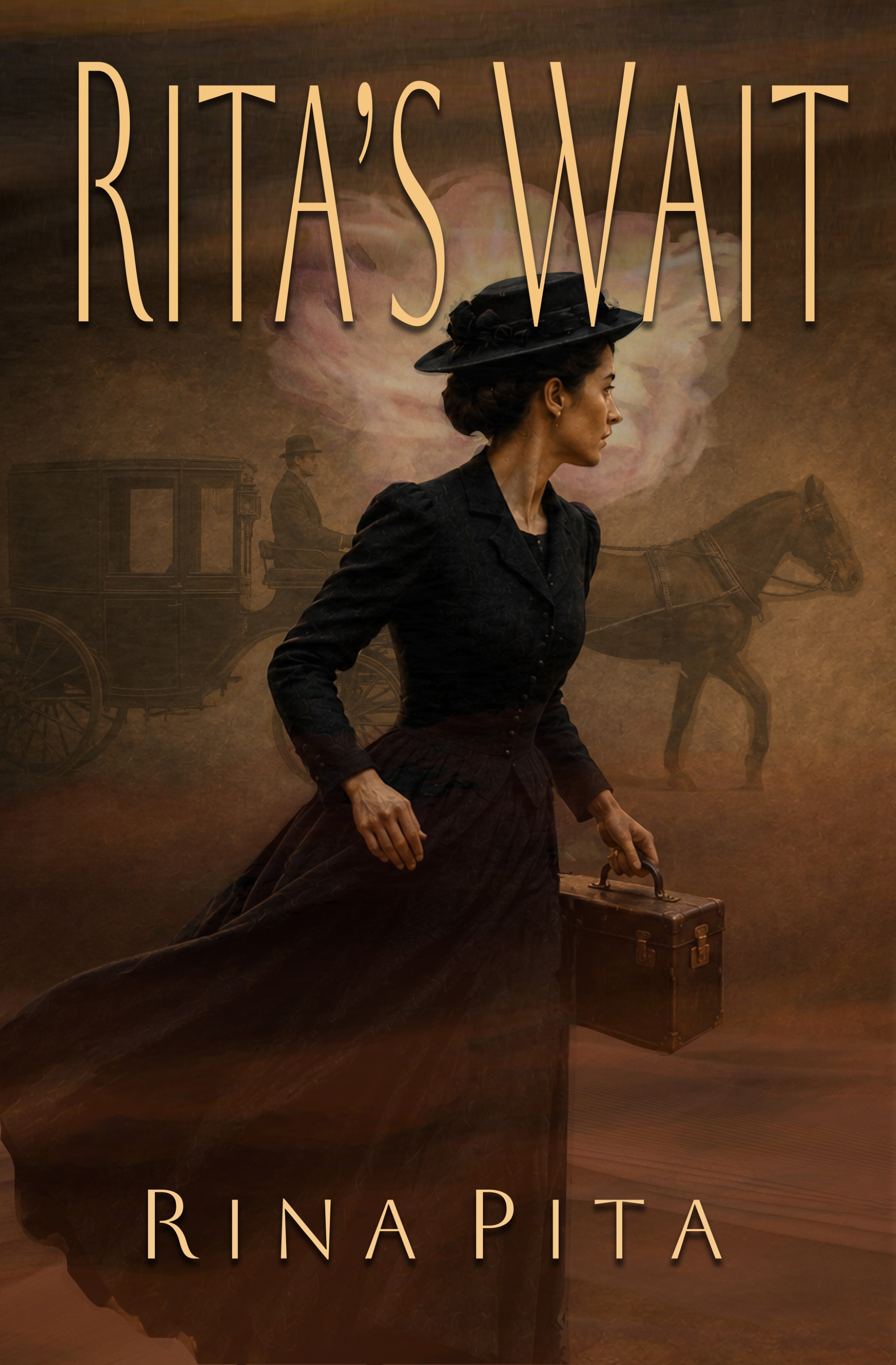
In an Antofagasta unsettled by the unrest of 1918, a young woman’s dreams take shape amid the uncertainties of a city in upheaval.
Rina Pita’s Rita’s Wait is an immersive and emotional reflection on the effects of war and political unrest on a community. As uprisings engulf her hometown, Rita faces an uncertain future for herself and those she loves. Her perspective gives the novel its intimacy: readers come to understand the home she knows, the possibilities she imagines, and the relationships that shape her hopes. Rich in historical insight and personal stakes, Rita’s Wait brings a turbulent chapter of Chilean history vividly to life.
One of the novel’s greatest strengths is the care Pita gives her characters. Every character in the book feels rooted in realism, possessing the complexity and depth that make a fictional community feel fully inhabited. Rita’s mother and cousin, her childhood friend Magdalena and Magdalena’s husband, Benedicto, and her love interest, Xavier, contribute to a network of relationships with its own tensions and attachments. While the size of the cast and the attention given to its members can occasionally feel unruly, the relationships they form and the challenges they face—whether tests of faith, romantic quarrels, or the everyday struggle of living amid political upheaval—paint a vibrant portrait of believable people. Each relationship helps establish the social world in which Rita must find her way.
This attention to detail also extends to the characterization of Antofagasta, which emerges as a presence in its own right. Pita’s descriptive prose gives the city a palpable sense of culture and community, extending that vividness into the surrounding desert. The settings feel tangible, and the people who inhabit them give those places meaning. Together, these elements create a persuasive sense of Antofagasta in 1918, drawing readers into the rhythms of a community whose future is increasingly uncertain.
While the world- and character-building in Rita’s Wait demonstrate Pita’s considerable storytelling abilities, the pacing and structure are occasionally less assured. Abrupt chapter endings can interrupt the flow, while some developments receive a brief summary despite seeming to warrant fuller treatment. In a novel so attentive to character and setting, these compressed moments are noticeable: readers have been given reason to care and may want more time with the consequences. Allowing pivotal developments greater space to unfold could deepen their emotional impact. These lapses remain limited, however, and the narrative retains its cohesion and pull.
With its richly realized community and a startling familial twist, Rita’s Wait offers a compelling portrait of private hopes shaped by public uncertainty. Pita’s strongest achievement lies in making Rita’s world feel inhabited by people with desires, loyalties, and troubles of their own. That sense of a life embedded in a larger community gives the novel its emotional resonance and leaves readers invested in the future Rita is waiting to discover.
—CANREADS BOOK REVIEW