
Editorial review
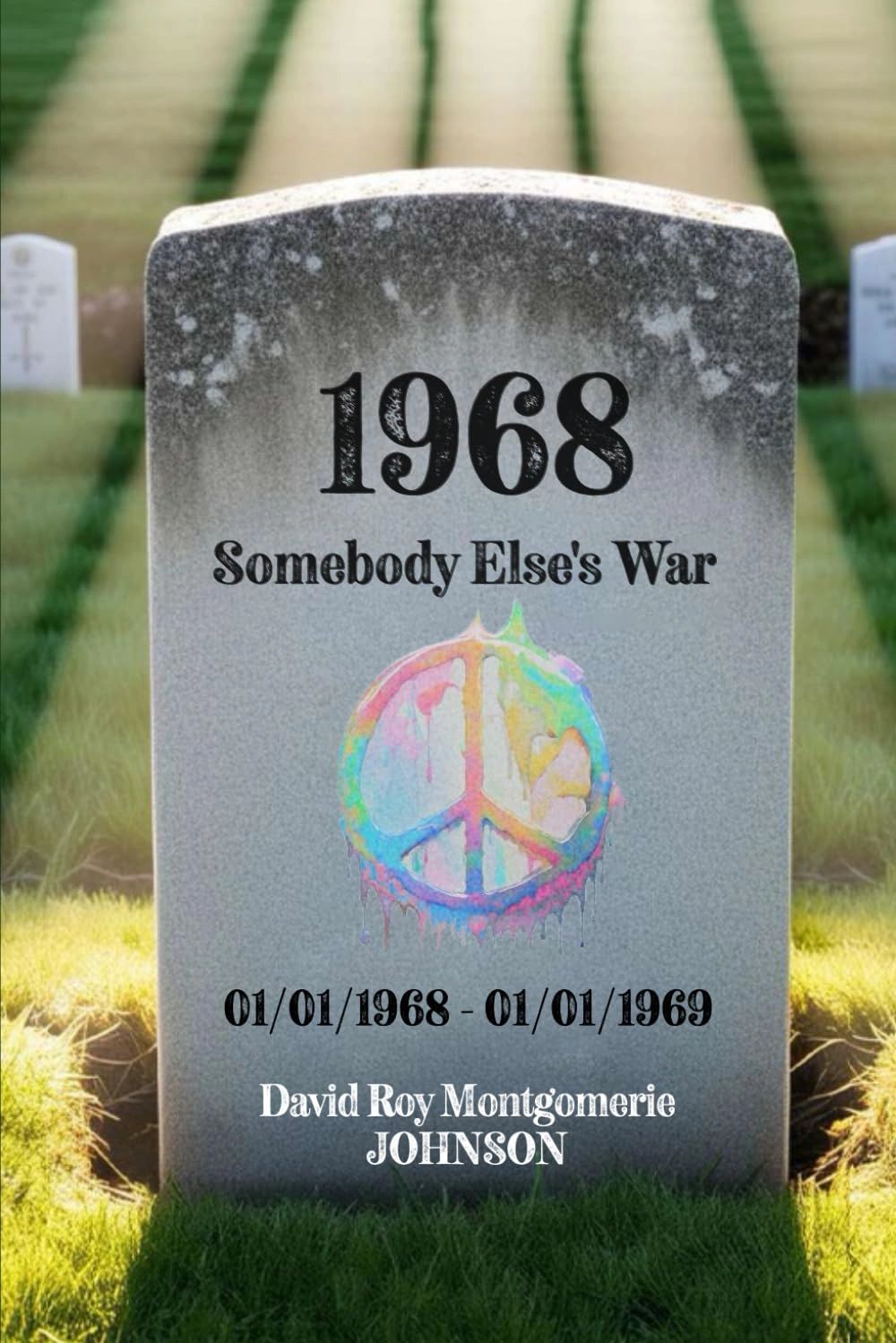
1968: Somebody Else’s War
By David Roy Montgomerie Johnson
Content Warning: 1968: Somebody Else’s War contains explicit language, including slurs, that reflect the realities of the time period. While these terms are used for historical accuracy, some readers may find them offens...
Reviewed by CANREADS
Content Warning: 1968: Somebody Else’s War contains explicit language, including slurs, that reflect the realities of the time period. While these terms are used for historical accuracy, some readers may find them offensive.
David Roy Montgomerie Johnson’s 1968: Somebody Else’s War is a simultaneously hilarious and realistic account of a small Ontario town caught in the midst of a rapidly changing world. Using the backdrop of the Vietnam War and its sweeping cultural and social shifts, Johnson captures how the uncertainty of this era affected everyday Canadians. He poses the question: How much can really change in a year? His answer—“a lot”—unfolds through a wide cast of characters, each struggling to either embrace change or cling to the past.
Set in the real town of Newport, Ontario, the novel follows a diverse group of townsfolk exploring connection and what it means to be human. At the heart of the story is Captain Sammy, a police officer grappling with PTSD from the Korean War, a strained marriage, and a rebellious son disillusioned by war and drawn to the counterculture. As he hunts for the perpetrator of a series of disturbing crimes, he must also confront his past violent acts in the war, as well as his undeniable attraction to a new, young waitress at the local diner. Another standout character of the novel is April May June (yes, that’s her real name), a teenage girl coming of age while her father, imprisoned for chicken theft, is released with a vendetta and years of unresolved trauma. As a town grappling with change collides with the wider world, Johnson successfully weaves together humour, history, and heartbreak.
Johnson’s greatest strength lies in his ability to capture the nuances of human relationships. His characters evolve naturally, shaped by shifting politics and personal struggles. The chemistry between them—from Captain Sammy’s fractured marriage to the mayor’s complicated dynamic with April May June’s mother—keeps readers engaged. However, while his use of explicit language reflects the time period, some slurs feel unnecessary and overused. The large cast, while rich in perspective, can sometimes be difficult to track, and more distinct voices and physical descriptions would help. Additionally, the setting is often underdeveloped; stronger sensory details, like the maple-syrup sweetness of a diner or the creak of old barstools, would make the world feel more immersive. A final polish—particularly refining setting descriptions, distinguishing characters’ voices, and correcting typos and punctuation errors—would enhance readability.
Johnson’s most impressive feat is blending fiction with history. Segments covering everything from MLK’s assassination, the My Lai Massacre, the Irish Troubles, and Apollo 8, add emotional weight, balancing historical fact with compelling storytelling. His depiction of Robert Kennedy’s assassination is particularly poignant, illustrating its impact on ordinary people, and it’s bound to make readers shed a tear.
With humour, heart, and historical depth, 1968: Somebody Else’s War is an unforgettable read. Fans of historical fiction and North American history will appreciate Johnson’s sharp wit and colourful cast of characters. Whether you lived through 1968 or are experiencing it for the first time through these pages, Johnson will guide you through.
—CANREADS CALGARY BOOK REVIEW