
Editorial review
The Honey Trap
By Dana L. Church
What if the bees we’re trying to save are destroying the planet? Dana L. Church’s latest book, The Honey Trap: How the Good Intentions of Urban Beekeepers Risk Ecological Disaster, challenges everything we think we know ...
Reviewed by CANREADS
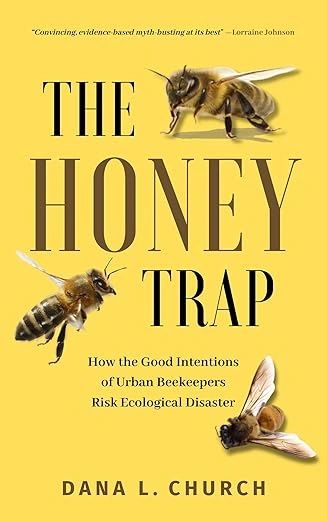
What if the bees we’re trying to save are destroying the planet? Dana L. Church’s latest book, The Honey Trap: How the Good Intentions of Urban Beekeepers Risk Ecological Disaster, challenges everything we think we know about protecting pollinators. Church reinforces that, yes, many bees need saving, but not the ones we think. Delving into the lives of indigenous pollinators worldwide, The Honey Trap presents key facts about these species before revealing how modern agricultural practices and domesticated bees have pushed indigenous bee species out of the ecosystems they evolved in.
When most people think of bees, they think of Apis mellifera, the Western honeybee. Church asserts that most people like Western honeybees because of the byproducts that they produce—honey, beeswax, and perceived “good karma,” otherwise known as bee-washing. Her deep dive into the subject reveals that a bumblebee species, Bombus terrestris, the Buff-tailed bumblebee, is also domesticated and shipped worldwide for agricultural purposes, snuffing out indigenous pollinators in the regions where these bumblebees are deployed. Bee-washing—a term coined by Church herself—redefines our understanding of ecological responsibility.
Throughout the book, Church makes compelling claims about the overpopulation of the Western honeybee and Buff-tailed bumblebee that we have ignored because of the bee-washing of apiaries in urban centres in North America and around the world. In doing so, Church masterfully debunks the myths surrounding urban beekeeping and honeybee overpopulation, such as the idea that apiaries increase the city’s biodiversity. She proves that urban biodiversity is only harmed by the influx of Western honeybee hives since they compete with other indigenous pollinators. The book’s subtitle comes into play at the end of the book, when Church investigates her experiences in Waterloo, Canada, where a group of urban beekeepers present a hive-to-jar honey workshop at her local public library. After the workshop, she explains how beehives have been introduced en masse to North American cities.
For those passionate about protecting all pollinators, this is the guide you've been waiting for—a fascinating exploration into both the hidden lives of indigenous pollinators and the risks they face. It’s an essential reading for urban planners, environmentalists, and anyone interested in the truth about bees. In The Honey Trap, there is action that readers can take for all pollinators—not just the one who happens to be the most likeable.
—CANREADS MONTREAL BOOK REVIEW